
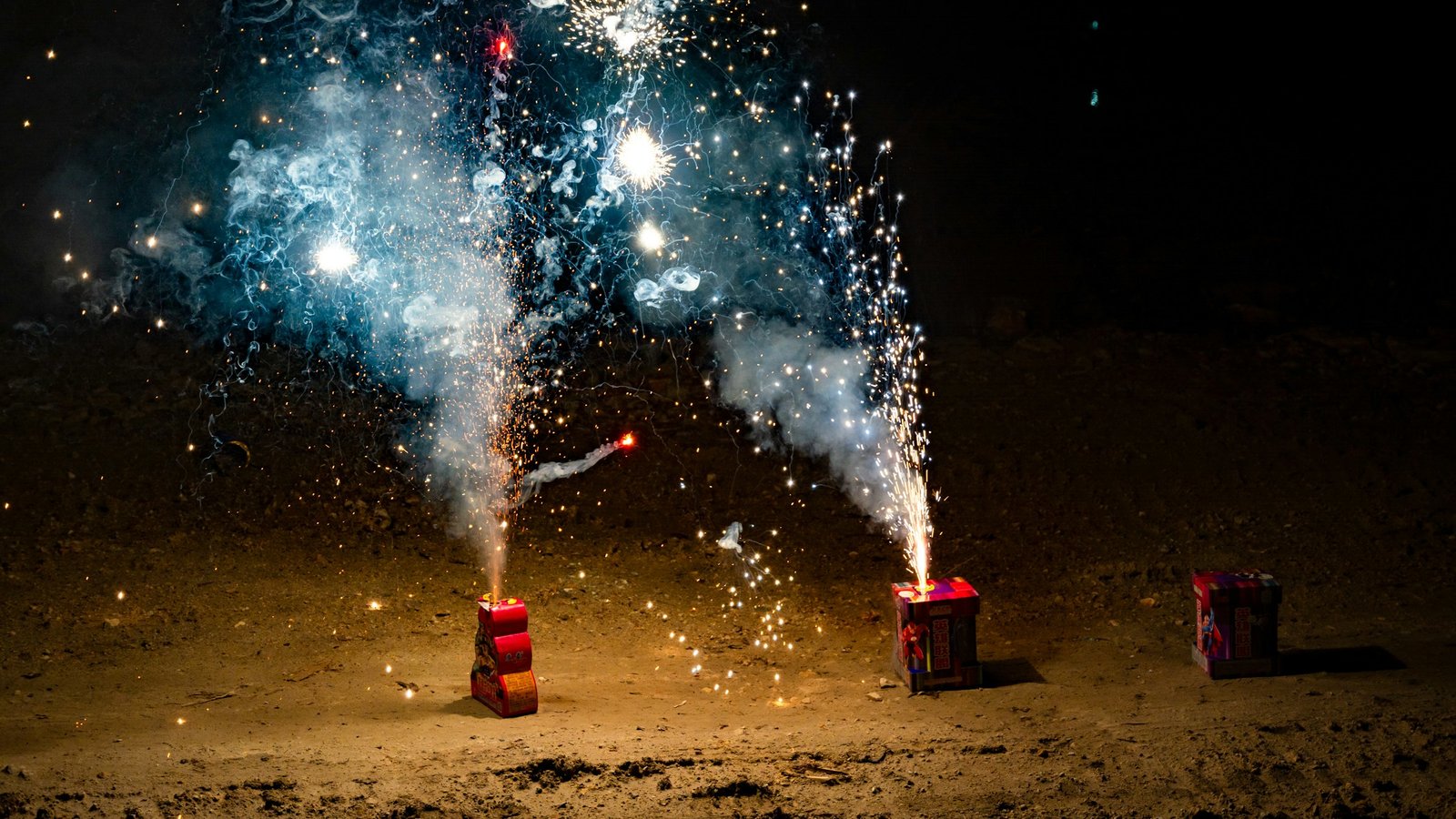
Fireworks are often associated with weddings, festivals, national celebrations, family gatherings, and other special events in Pakistan. Their bright colors and loud sounds can make an occasion memorable, but fireworks also introduce serious fire and injury risks. A small mistake, crowded venue, dry surroundings, or nearby combustible material can quickly turn a celebration into an emergency.
The safest approach to fireworks is not simply knowing how they work. It is understanding the risks, following local requirements, keeping people away from hazardous areas, preparing for emergencies, and making sure that trained and responsible adults or authorized professionals manage any permitted display.
For homes, businesses, wedding halls, event venues, and other properties, fireworks should always be considered as part of the overall fire-safety plan. Pakistan’s Building Code of Pakistan Fire Safety Provisions 2016 specifically includes special events and temporary occupancies within its fire-safety scope. It also addresses fire prevention, life safety, emergency operations, and means of egress.
Why Fireworks Require Careful Safety Planning
Fireworks involve ignition, heat, sparks, smoke, and sudden noise. These characteristics create several possible hazards.
The surrounding environment is particularly important. Decorations, fabric, paper, dry vegetation, packaging, temporary structures, electrical equipment, and other combustible materials may increase the consequences of an accidental fire.
Crowds create another challenge. At weddings and public events, many people may be unfamiliar with the location of exits or emergency equipment. Children may also be present, making separation between spectators and hazardous areas especially important.
Weather can also affect risk. Strong winds can carry sparks or burning material beyond an intended area, while dry conditions can make surrounding materials easier to ignite.
For these reasons, fireworks should never be treated as an ordinary part of event decoration.
Fireworks and Wedding Events in Pakistan
Wedding celebrations are an important part of social life in Pakistan, and fireworks may sometimes be included in outdoor functions. However, a wedding venue may already contain several other fire risks, including temporary electrical connections, decorative lighting, cooking areas, generators, fabrics, furniture, and large numbers of guests.
Adding fireworks without considering these factors can increase the overall fire risk.
Before an event, organizers should consider:
- Where guests will stand
- How people will enter and leave the venue
- Whether emergency exits remain clear
- Whether combustible decorations are located near potential fire hazards
- Whether emergency vehicles can access the property
- Who is responsible for emergency communication
- Whether the venue has suitable fire-safety equipment
- Whether the planned activity is permitted by the relevant local authorities
The Building Code of Pakistan Fire Safety Provisions 2016 specifically recognizes special events, outdoor events, exhibitions, and other temporary occupancies as situations requiring fire and life-safety consideration.
Follow Local Rules and Venue Requirements
One of the most important principles of fireworks safety is to follow applicable local laws, permissions, venue policies, and instructions from relevant authorities.
Requirements can vary depending on the location, type of event, venue, and circumstances. Event organizers should therefore confirm requirements with the appropriate local authorities rather than assuming that fireworks are automatically permitted.
A professional event venue may also have its own restrictions. Some hotels, marriage halls, housing communities, commercial properties, or public venues may prohibit fireworks completely because of their building design, surrounding properties, fire-protection systems, or insurance requirements.
Ignoring these restrictions can create unnecessary risks for guests and property owners.
Keep Spectators Away From Hazardous Areas
Spectators should never be placed close to an area where fireworks are being handled or prepared.
A clearly controlled separation area can help reduce the chance of people accidentally entering a hazardous location. Children should receive particular attention because they may not understand the risks associated with fireworks.
Event organizers should also avoid allowing guests to gather around equipment, storage areas, electrical equipment, or other locations associated with the display.
The safest event plan makes the boundaries obvious and assigns responsible adults or trained personnel to monitor them.
Never Mix Fireworks With Other Fire Hazards
Fireworks should not be combined with activities that introduce additional unnecessary risks.
For example, an event may already have:
- Cooking equipment
- Gas appliances
- Electrical generators
- Temporary wiring
- Decorative lighting
- Candles
- Fuel or combustible materials
- Large quantities of paper or fabric decorations
When several hazards are present at the same event, emergency planning becomes even more important.
Keeping different hazards properly separated can help prevent one incident from developing into a larger emergency.
Check the Venue Before the Event
A basic venue inspection can identify problems before guests arrive.
Event organizers should look at the surrounding area and identify combustible materials, restricted spaces, nearby buildings, vehicles, trees, overhead structures, electrical equipment, and possible evacuation routes.
The inspection should also consider access for emergency responders.
The Building Code of Pakistan Fire Safety Provisions 2016 includes requirements related to access for fire-department operations and means of egress, showing why emergency access and evacuation should be considered as part of broader fire planning.
Keep Emergency Exits Clear
One of the biggest mistakes at crowded events is allowing decorations, furniture, equipment, or guests to block exits.
An emergency can become much more dangerous when people cannot quickly identify or reach a safe exit.
Exit routes should remain:
- Clearly identifiable
- Unobstructed
- Accessible throughout the event
- Suitable for the expected number of people
- Free from temporary storage and unnecessary equipment
The Pakistan Engineering Council’s building-code materials include fire-safety requirements concerning means of egress and emergency arrangements.
Fire Alarms Are an Important Part of Event Safety
Fireworks are only one part of an event’s overall fire-risk picture. A venue may also face risks from electrical faults, cooking equipment, generators, decorations, or other ignition sources.
A properly designed fire alarm system can provide early warning when smoke or heat is detected. This gives occupants more time to respond and evacuate.
For larger buildings and commercial properties, a suitable fire alarm system in Pakistan can form an important part of a broader fire-protection strategy. Flame Defender describes systems using smoke detectors, heat sensors, control panels, and notification equipment for different types of properties.
However, a fire alarm should never be viewed as permission to ignore other safety measures. Detection, evacuation planning, fire protection equipment, emergency access, and staff awareness all work together.
Maintain Fire-Safety Equipment
Fire extinguishers, alarms, emergency lighting, and other fire-protection equipment should not simply be installed and forgotten.
Equipment needs appropriate inspection, testing, servicing, and maintenance so that it remains available when needed. Pakistan’s Fire Safety Provisions 2016 include the design, installation, maintenance, repair, servicing, and testing of fire-protection systems and equipment within their scope.
For an event venue, organizers should make sure that existing safety equipment remains accessible and has not been blocked by decorations, furniture, temporary structures, or event equipment.
Do Not Allow Untrained People to Handle Fireworks
Fireworks should not be treated as toys or entertainment equipment for children.
Young people should remain spectators in designated safe areas and should not be asked to handle, carry, modify, dismantle, or experiment with fireworks.
Similarly, event organizers should not allow untrained guests to take control of a fireworks activity simply because they want to participate.
Where fireworks are legally permitted, their management should be left to responsible adults and, where required or appropriate, trained or authorized professionals.
Be Careful With Decorations
Wedding and event decorations can add significant combustible material to a venue.
Paper decorations, synthetic fabrics, banners, temporary structures, floral arrangements, packaging, and other materials can contribute to fire spread if they become involved in a fire.
Organizers should therefore consider the placement and fire characteristics of decorations when planning an event.
A fire alarm system does not replace safe construction or appropriate materials. Fire detection and fire-resistant construction serve different purposes and should be considered together.
Consider Weather Conditions
Outdoor fireworks can be affected by wind and dry conditions.
Strong winds may carry sparks or burning material toward spectators, buildings, vehicles, vegetation, or other combustible objects.
If weather conditions create an unsafe environment, the responsible decision is to postpone or cancel the activity rather than attempt to continue despite the increased risk.
Weather should therefore be part of the event’s go/no-go safety assessment.
Have a Simple Emergency Plan
Every event involving a potential fire hazard should have an emergency plan.
The plan should identify:
- Who is responsible for raising the alarm
- Who communicates with emergency services
- Where guests should move during an evacuation
- Which exits should be used
- How staff will guide guests
- How emergency responders can reach the property
- Where vulnerable guests may need additional assistance
Staff should understand the plan before the event begins.
Guests do not need a complicated explanation, but important exit information should be easy to understand.
Do Not Return to an Unsafe Area
If a fire or other emergency occurs, people should move away from danger and follow the instructions of responsible authorities and emergency personnel.
People should not return to collect phones, bags, clothing, decorations, or other personal belongings.
Property can be replaced. Protecting people must remain the priority.
Fireworks Safety for Families
Families attending celebrations should also think about fire safety.
Parents and guardians can help by keeping children away from restricted areas and explaining that fireworks are not toys.
Children should remain with responsible adults and should not be allowed to approach fireworks, equipment, storage areas, or debris.
After a display, adults should also remain cautious around the event area rather than assuming that everything is immediately safe.
Fireworks Safety for Businesses and Event Venues
Businesses that host weddings, festivals, exhibitions, or other gatherings have additional responsibilities because they may be responsible for many people at the same time.
A venue’s fire-safety planning should consider:
- Occupant capacity
- Emergency exits
- Fire alarms
- Fire extinguishers
- Emergency lighting
- Electrical systems
- Kitchen areas
- Temporary structures
- Decorations
- Emergency access
- Staff training
- Communication procedures
The Pakistan Engineering Council identifies special events and temporary occupancies within the scope of its Fire Safety Provisions, reinforcing the importance of considering fire safety before an event rather than only reacting after an incident.
Common Fireworks Safety Myths
Myth 1: Fireworks are safe if the event is outdoors
Outdoor locations can reduce some building-related risks, but they do not eliminate fire hazards. Wind, dry vegetation, vehicles, temporary structures, and crowds can still create dangerous conditions.
Myth 2: A fire extinguisher makes fireworks completely safe
Fire extinguishers are important emergency equipment, but they do not make an unsafe activity safe. Prevention, separation, planning, and emergency preparedness are equally important.
Myth 3: Children can handle fireworks if an adult is nearby
Children should not be responsible for handling fireworks. Keeping them in designated spectator areas is a safer approach.
Myth 4: A fire alarm is only necessary inside large buildings
Fire alarms are part of a wider fire-safety system, and their requirements depend on the building, occupancy, design, and applicable regulations. The Building Code of Pakistan provides requirements for fire alarm systems where applicable.
Myth 5: Fireworks are only dangerous during the display
Fire risks can also exist before and after a display because of storage, handling, debris, damaged equipment, or accidental ignition. Safety planning should cover the entire event period.
Building a Safer Fire-Safety Plan in Pakistan
Fireworks safety should be included within a larger fire-protection strategy.
For homes and businesses, this can include suitable smoke detection, fire alarms, emergency planning, appropriate fire extinguishers, clear escape routes, safe electrical systems, and regular maintenance.
For larger properties, a professionally designed fire alarm system in Pakistan can help provide early warning when smoke or heat is detected. Flame Defender offers fire alarm solutions for residential, commercial, and industrial properties and describes services including site assessment, system design, installation, commissioning, testing, maintenance, and upgrades.
You can learn more about fire-safety solutions from Flame Defender.
Conclusion
Fireworks can be part of celebrations, but they should never be treated casually. Safe events depend on planning, appropriate permissions, responsible supervision, crowd management, clear exits, suitable fire-protection equipment, and preparation for emergencies.
In Pakistan, fire-safety planning for special events is addressed within the broader framework of the Building Code of Pakistan Fire Safety Provisions 2016.
The most important principle is simple: entertainment should never come before safety. Event organizers, venue owners, families, and guests all have a role in reducing fire risks and making celebrations safer.
FAQs
1. Why are fireworks considered a fire-safety risk?
Fireworks involve heat, sparks, smoke, and ignition sources. These can create risks when people, buildings, vehicles, dry vegetation, decorations, or other combustible materials are nearby.
2. Can children handle fireworks?
Children should not handle fireworks. They should remain in designated spectator areas under responsible adult supervision and away from areas where fireworks or related equipment are being managed.
3. Should a wedding venue have a fire alarm system?
Fire-alarm requirements depend on the building type, occupancy, design, and applicable fire-safety requirements. Where a fire alarm is required, it should be appropriately designed, installed, tested, and maintained.
4. What should an event emergency plan include?
An emergency plan should cover alarm procedures, evacuation routes, emergency exits, staff responsibilities, communication, emergency access, and assistance for people who may need additional help.
5. What is the role of a fire alarm system during an event?
A properly designed fire alarm system can detect signs such as smoke or heat and provide early warning to occupants. This can give people additional time to respond and evacuate safely.